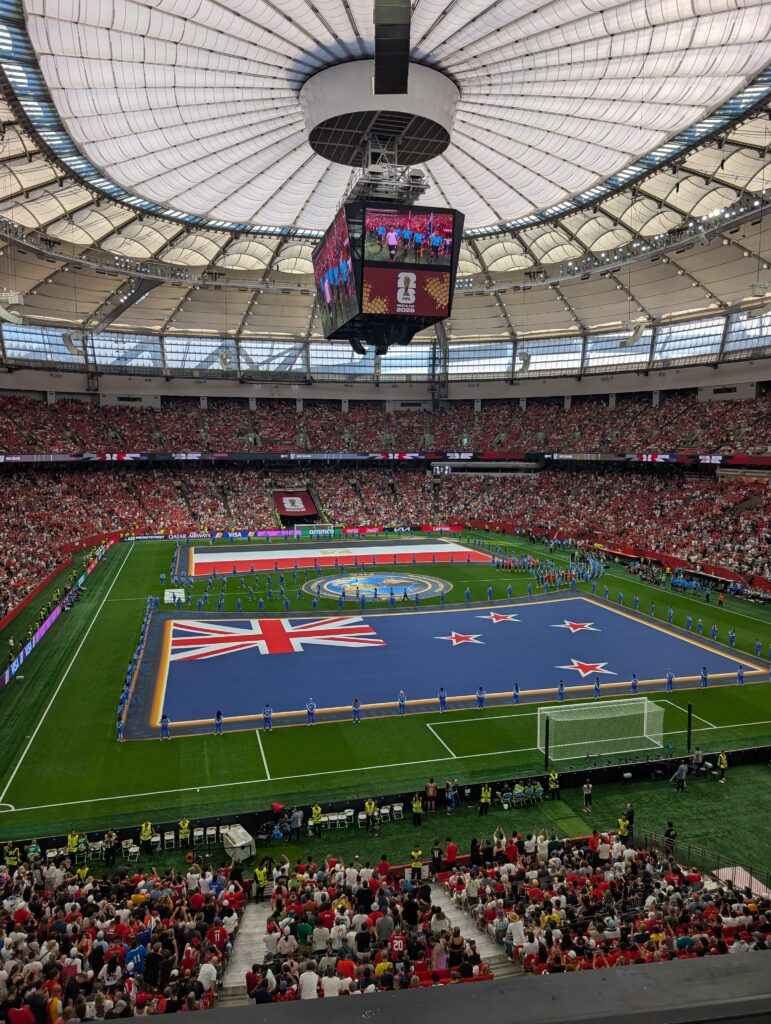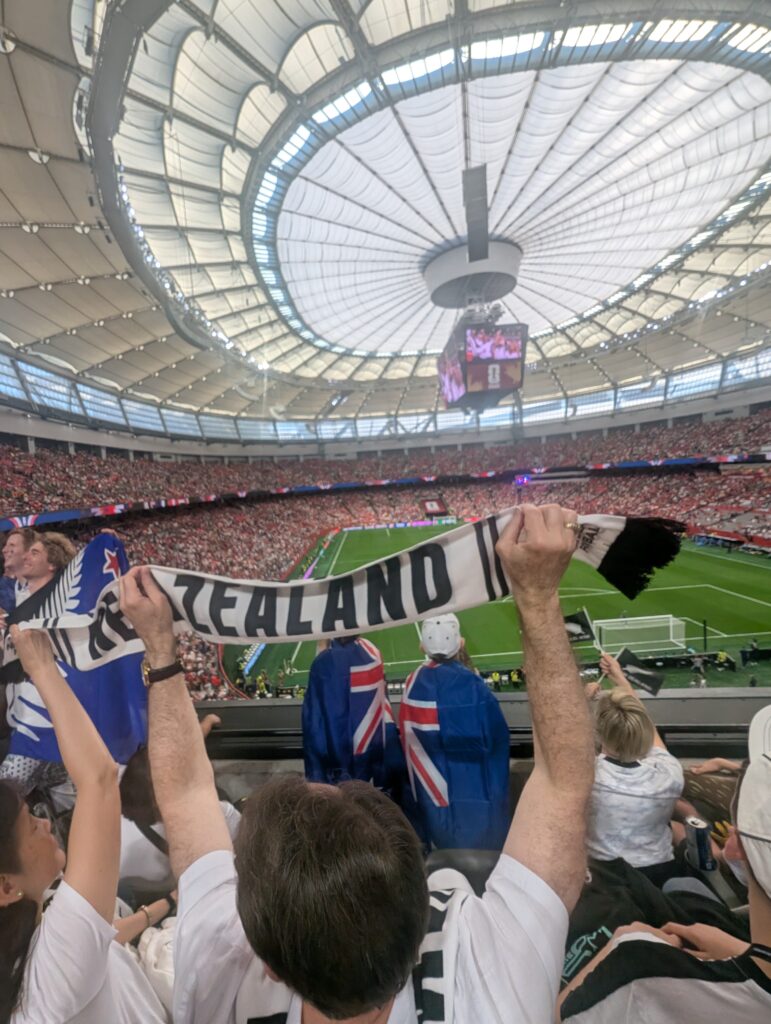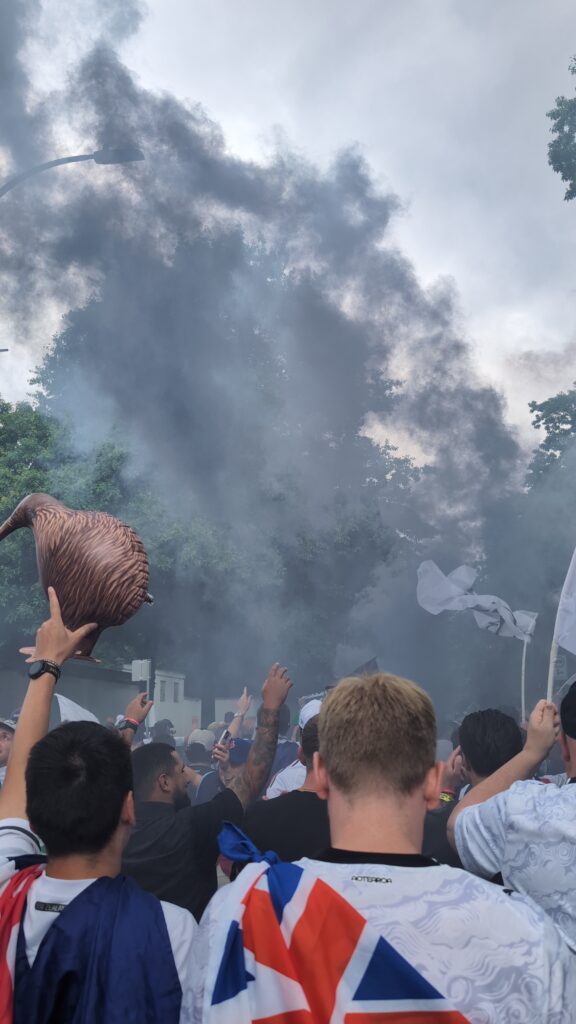
Featured Image: The Atmosphere at M&T Bank Stadium – Joseph Simpson
Baltimore, Maryland, U.S.A. Best known to the outside world for the 1988 and 2007 films of the same name ‘Hairspray,’ Edgar Allan Poe’s brief residence, and not a great deal else unless you are a fan of Major League Baseball (MLB) or the National Football League (NFL). The city flew under the radar during the FIFA World Cup earlier this year, despite the 71,000 capacity dwarfing several other stadiums used in the competition. Overall, Baltimore does not make global, or national headlines very often. On Saturday, international headlines were certainly made, as for the first time thirty years, a victor was declared in a All Blacks-Springbok tour.
Before Baltimore
The Greatest Rivalry tour had been a difficult watch for Kiwis around the world. The All Blacks started very strong. This siad, the first five games opened with far from gauranteed results. Given the lynch mob that is the New Zealand public, and recently, the New Zealand Rugby executive, and the extended history of not losing (almost!) every game to non-test sides, anything other than a four-from-four sweep of the provincial teams would have likely led to Scott Robertson or Jamie Joseph getting on a flight to South Africa.
One of the main differences discussed in the media is the difference in depth between the two international sides, with the Springboks largely considered to have talent running much further deep than the All Blacks. This is not because of raw talent, as New Zealand has plenty of that, but how the caps have been shared amongst the Springboks differs greatly from the All Blacks. On-form players can be dropped and benched in Rassie Erasmus’ squad without complaint, compared to the All Blacks, whom under Rennie, Robertson, Foster, and beyond, aging players will be given the nod over younger talent almost every time since the game became professional back in 1996, when the All Blacks fatefully exacted their revenge on the Springboks for the 1995 World Cup defeat. It really makes you wonder, have we really learnt nothing from the ‘New Zealand Cavaliers’ and the ‘Baby Blacks’?
With this being said, with ten debutants only halfway through the test calendar, Rennie is certainly more comfortable with giving Black Jerseys to probables and possibles, even if it is to soak up the hurt from Western Province farm boys or Gqeberha (Formerly Port Elizabeth) battlers. Seeing the likes of Ruben Love and Cam Roigard hold onto the inside back jersey for most of the tour shows that the All Blacks are flirting with the idea of returning to a true meritocracy.
It’s a shame that these descisions possibly came too little too late for the men in black. Opening the tour in the fortress of Ellis Park, Johannesburg, the All Blacks took advantage of every loose ball opportunity, every penalty, every poorly formed ruck, to run circles around Pieter-Steph du Toit’s Springboks, winning a comfortable 33 to 16. Josh Moorby gave everyone glimpses of everyone’s favourite express, Paekākāriki’s Christian Cullen with his movement on attack. Fabian Holland might not have saved the scrum but certainly played out of his skin in the lineout and had a defensive workrate of Brodie Retallick, while Love and Roigard looked as composed as they did in their rampaging Super Rugby championship earlier in the year. It’s safe to say the All Blacks do in fact, have an admirable starting 23.
After Ellis Park, everything seemed to go wrong. There are the obvious we can talk about, injuries plagued the All Blacks, with several starters going in exchange for the loss of South Africa’s Cheslin Koble. The scrum was incredibly poor in the first test, slightly remedied by very vigilant officiating in the second test, but never fully recovered for the return to Johannesburg (If you aren’t cheating you aren’t trying – Al Davis). Coaching could be worth mentioning, but the attack and defence of both teams largely did not change from test to test. Kurt-Lee Arendse, who we will mention a lot more in this article, pulled off something that could not have been expected, like Caleb Clarke‘s debut in 2020, or Louis Bielle-Biarrey deciding to put France on his back any time they’re down a try. The Springboks loved their scrum and their maul, but were pretty useless outside of that. The All Blacks only succeded in grinding down the Springboks with extended phases once in all of four tests. The Stregnths and weaknesses of both sides were on full display.
Then comes Baltimore. The staging ground for All Black redemption, currently down two to one to their greatest rivals. While this is the first ever international rugby match held at M&T Bank Stadium, both sides have had disappointing experiences less than an hours drive away, in the national capital of Washington D.C. In Rassie Erasmus’ first-ever test, the Springboks fell short against Wales 22-20, a team that would then go on to have a 4-0 winning streak against the South Africa, broken only in their fateful 2019 Rugby World Cup Clash. The All Blacks visited D.C in 2021 to take on the U.S.A Eagles in a game that the Americans will remember for their first ever tries against the All Blacks, in exchange for a 104 point thumping, but for the All Blacks it was without competition and without a crowd, with well over a third of the stadium visibly empty for the clash. The biggest rugby brand in the world, in the capital of biggest market in the world, and everyone stayed home!
While D.C might already be written off for the men’s and women’s Rugby World Cups, Baltimore clearly isn’t. The city, and both teams, had a lot to prove. So it makes you wonder why Beauden Barrett, Rieko Ioane, Richie Mo’unga, and Patrick Tuipulotu got the nod over the All Blacks of tomorrow for this test? Perhaps it was verancy that Dave Rennie wanted, a change of pace in the game? Perhaps it was in response to the Springboks naming a veteran squad? Cynically, you could ask yourself whether the U.S. stakeholders demanded more recogniseable games for this game? That seems like an absurd theory, but the addition of these players felt like an NBA All Star game, and arguably, many of them played like it was one too.
The Match
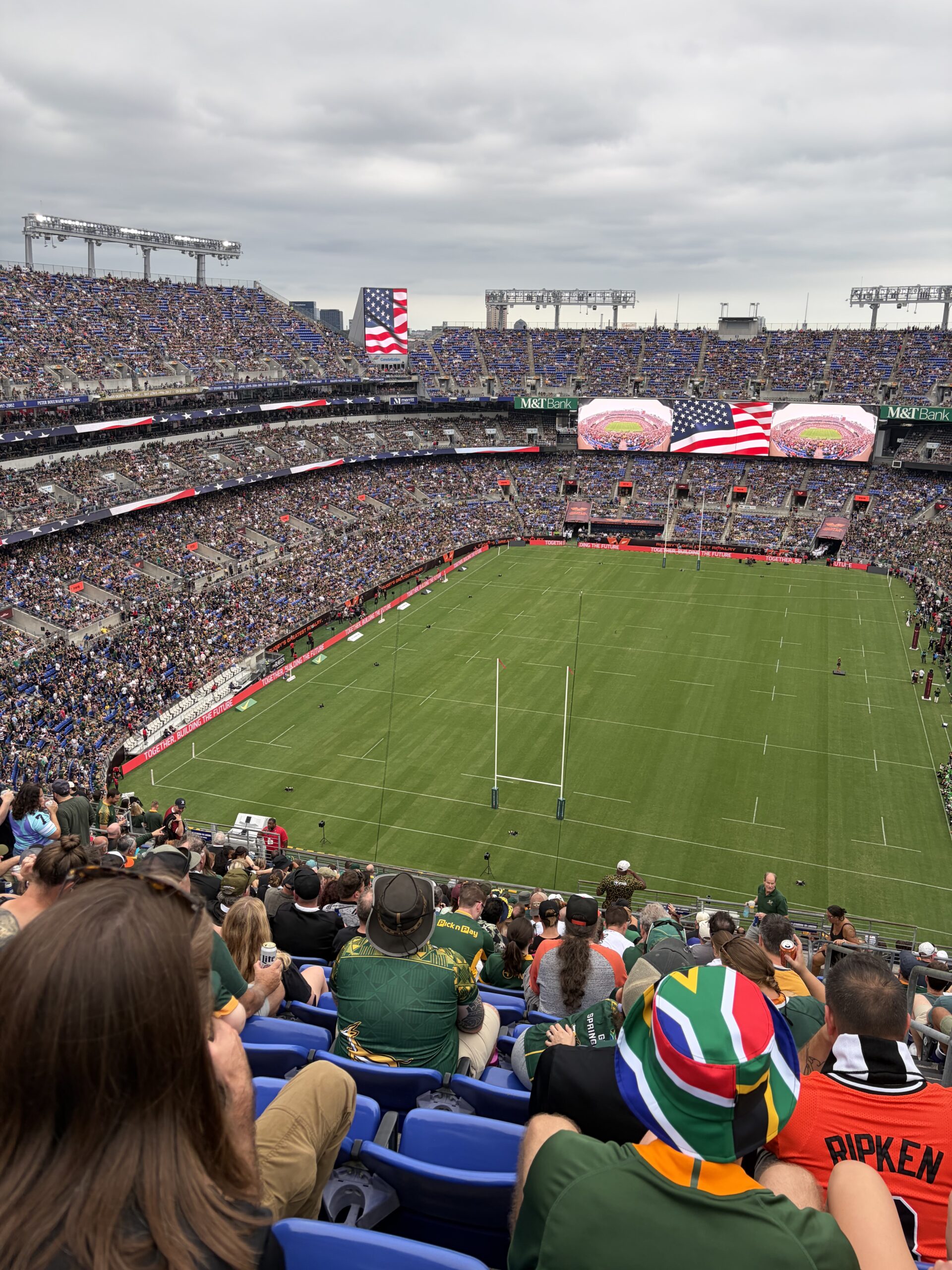
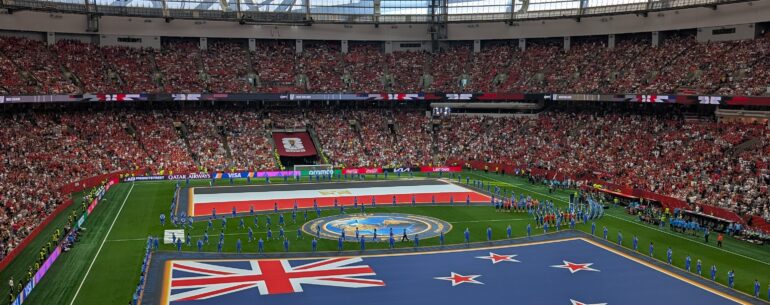
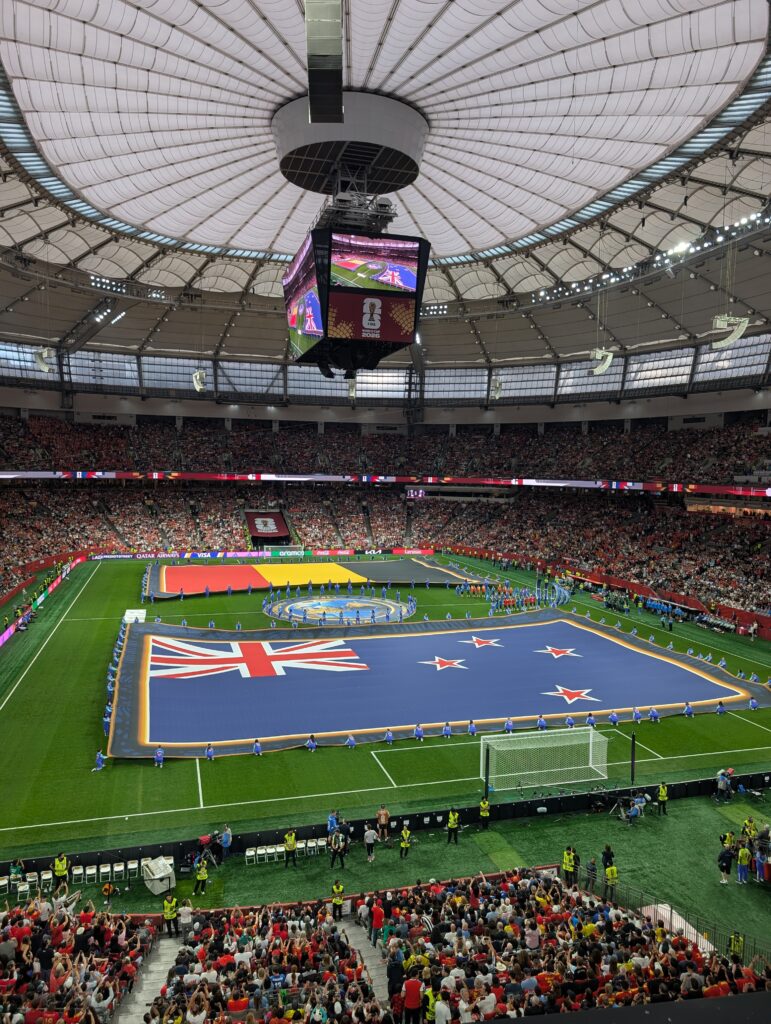
After a rendition of the Star Spangled Banner, which the ground announcer forgot was supposed to take place, the Springboks and All Blacks Arrived on the field to sing God Defend New Zealand followed by Nkosi Sikelel’ iAfrika. Captain Codie Taylor was joined by golfer and major championship winner Ryan Fox as the flag bearer, a slightly more recogniseable face for the American fans to legends Sean Fitzpatrick and Ruahei Demant. Followed by a return to Kapa o Pango led also by Taylor. Unlike in South Africa where Rassie was fighting a loosing battle to quiet the crowd. There was a surprising hush amongst the stands as the All Blacks performed, especially considering out of the almost seventy thousand spectators present, at least fifty would have been wearing the green and gold.
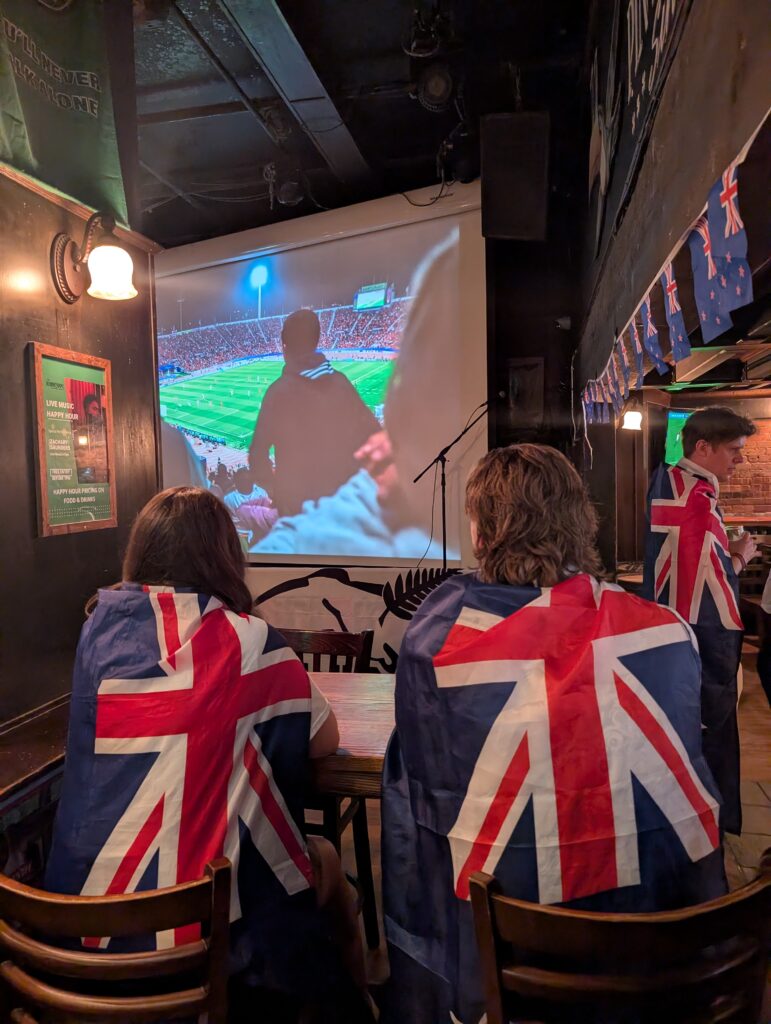
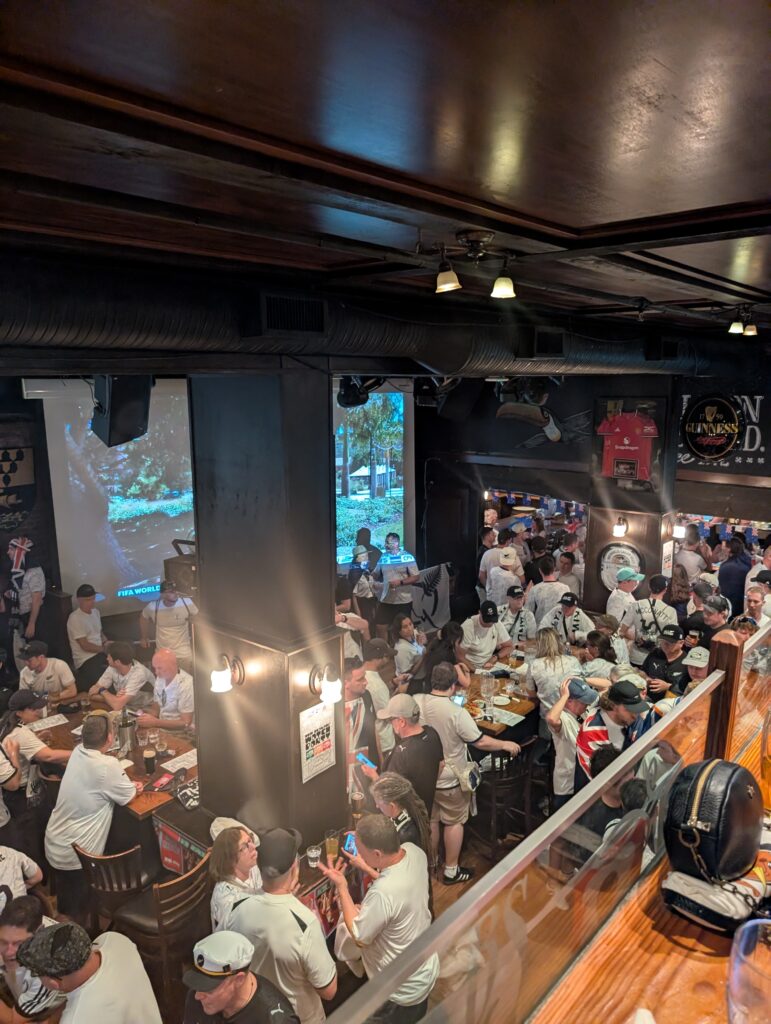
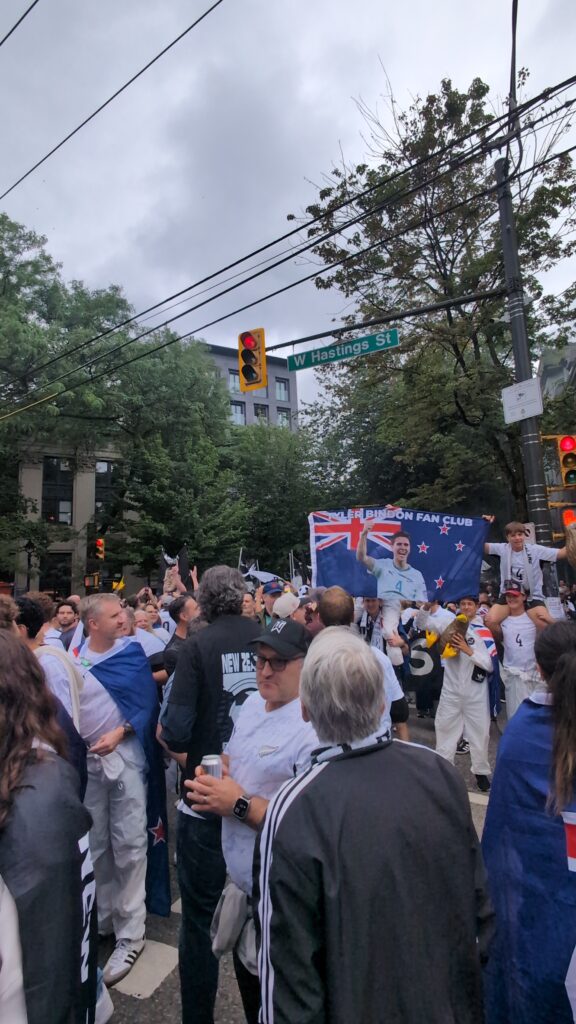
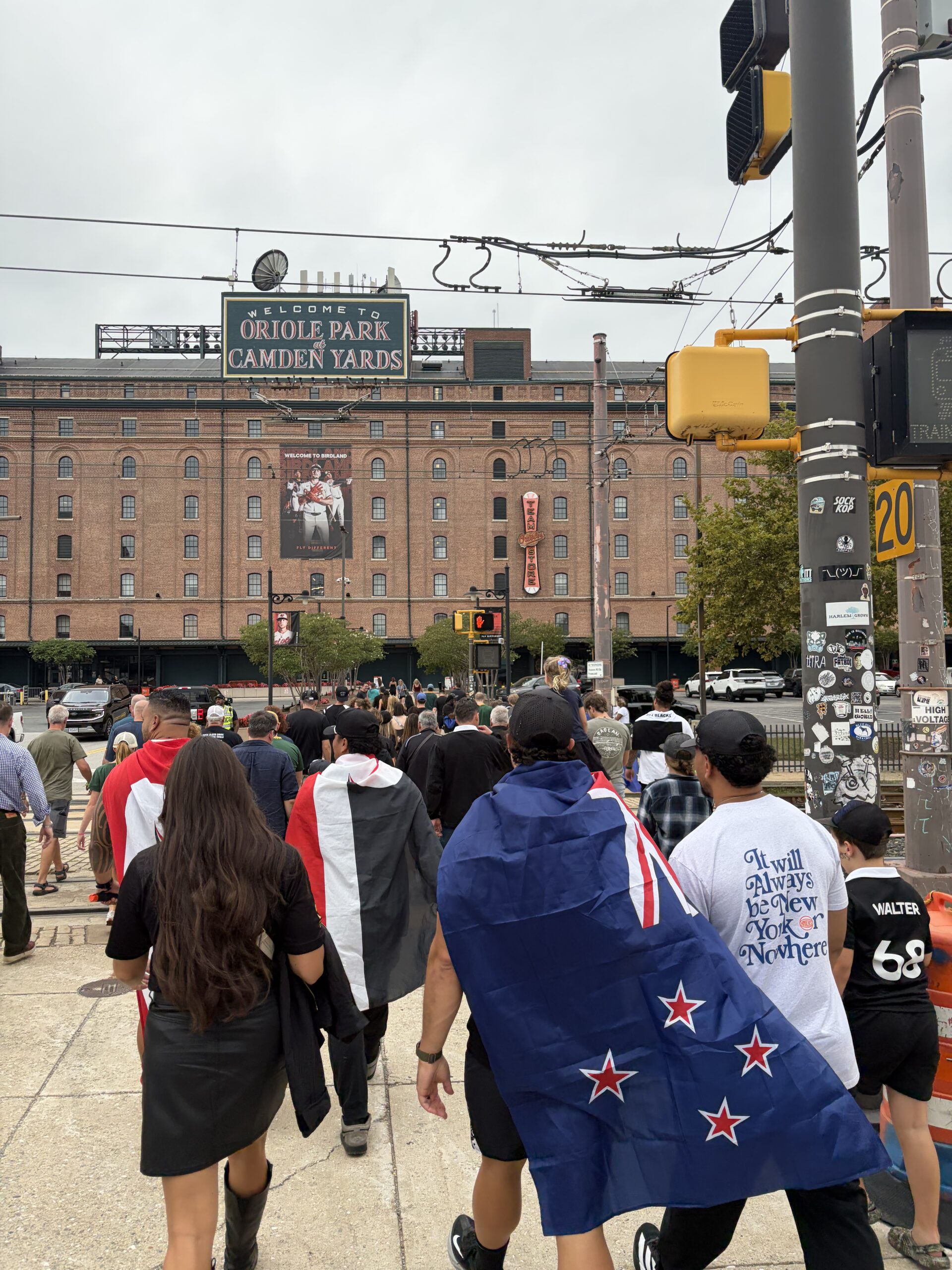
It’s worth noting that the atmosphere in Baltimore before the game was the eeriest I’ve ever experienced for a rugby game, especially for a New Zealand – South Africa game. I was expecting rambunctious pubs, cheers and quips in the street, photos and jersey swaps. While there certainly was enough of green and gold, and black and white, to make the Baltimore waterfront look like Auckland’s Viaduct Harbour and Wynyard Quarter, you’d think you’d just shown up to sip some bubbly at the ASB Classic. Perhaps several of the South Africans, who must go through a visa process, were intentionally on their best behaviour. Or for the rest of them, including a large portion of New Zealand supporters, were Americans picking national sides to get behind like we do back home with our NBA teams. Does anyone else back the Oklahoma City Thunder solely because of Steven Adams’ drafting? Say what you will about the U.S.A, public drunkeness outside of a university is much harder to come by than it is in the southern hemisphere.
It certainly wasn’t going to be easy to get written off at the game with the average alcoholic beverage setting you back $20 USD after tax and tip (about 35 NZD, or 350 Rand for those at home), nobody will be complaining about the prices at Eden or Ellis Park after this match. Even if you were thirsty, you’d spend most of your time in line as North American sports fans are not ones to wait till half time for their hotdog and Budweisers. Due to the significant number and legnth of stoppages in sport here, you better believe that the concession stands are always busy, and they’ll follow this even when the rest of the world is in town. Scrum? Bathroom break. Lineout? Popcorn. Conversion? Selfies in front of the Baltimore Ravens’ stadium installations.
Quiet atmospehre aside, the match must go on. Richie Mo’unga, who hasn’t played a test since the 2023 World Cup Final, kicked off everything in Maryland. The Springboks took first blood with a penalty through the boot of Sacha Feinberg-Mngomezulu which was quickly responded to by a break from Will Jordan and Damian McKenzie charging into the Boks twenty-two after after a few failed attempts to find space on the edges. Roigard picking the right man as skipper Codie Taylor crashed over the line about ten metres in from touch.
Springbok tries after this were frustratingly predictable, and even worse, inevitable. It would seem that the All Blacks defence on the try line is not up the the physicality that the Springboks will put in, not just on individual touches and tackles, but every single ruck. When an All Black was taken to ground in Baltimore, the Springbok tackler would always roll and then jackal for the ball, nearly every single time, forward, or back. If it’s contested? Let the All Blacks have it. The reason this worked is because there was no visible structure to the All Black attack, or perhaps the organised chaos of a knock on or loose ball was the structure. The problem with this is often outside backs found themselves in narrowing space without any support runners, forcing them to either make an ambitous pass or concede a penalty holding onto the ball after they get flattened by a cake-munching baby rhinoceros.
This is something we see consistently from All Black loose forwards but only occasionally will the likes of Cam Roigard or Will Jordan bother to attempt to turn over the ball in the ruck. But it’s also a lot harder to do because of how the Springboks attacked, their structure was very tight, there were guards at every rucks and only on a few occasions did the magic feet of Kurt-Lee Arendse turn tactics off and have a go himself, often supported by several midfielders or outside backs. Rassie simply had the All Black attack figured out, and knew they didn’t have the physicality to mount a solid defence.
Damian de Allende socred right under the noses Ethan de Groot and Anton Lienert-Brown, possibly because most of the forward pack were worried about Eben Etzebeth’s carry two phases before hand and hadn’t got to their feet, and eventual player of the match Morné van den Berg ‘broke’ Sam Darry’s ankles after another All Black overcommitment to the driving maul. But was it an overcommitment?
Its worth noting here that a continously exploited and criminally simple tactic from Rassie in earlier tests was simply to take the ball from edge to edge to put defensive weak points Leroy Carter and Damian McKenzie in the same channel. This was such a problem that Jesse Kriel, arguably one of the least powerful bodies in the Springbok arsenal, looked like 1995 Jonah Lomu on the wing, smashing through defenders, when he wasn’t spilling the ball, that is. Come Baltimore, this was no longer a problem with Josh Moorby given the nod over Carter, but where Jessie Kriel might have had a slgihtly quieter game, accross the board the aging Springbok squad (the average age on the team was 31 for this test) were either too strong, or too fast, for the equally aging All Blacks.
Funnily enough, for all the attacking errors and inability to defend the All Blacks found themselves in, one of the best tries came right after this with a thirty-phase monster toward the end of the first half which some might argue was the All Blacks having nothing on for attack. I’d argue it’s the first and only time in eighty minutes the Kiwis matched Springbok physicality. After bunching in the Bok defenders on the right-hand-side, a simple, but perfectly executed series of passes from New Zealand’s playmakers allowed for Will Jordan to find a gap and score under the posts, not without having to muscle through Damian de Allende to get there. So the All Blacks do have the pace and physicality to match the springboks, they are able to run a structured attack. It’s just a shame for the series it felt like they did that for 32 phases in Baltimore and one game in Johannesburg and nowhere else.
Half time: South Africa 17 – 14 New Zealand.
Malcolm Marx through the maul, Pieter-Steph du Toit muscling straight over the edge of a ruck with no guards, the first two score of the second half were the exact same as the first. Instead of veteran Anton Lienert-Brown been caught dozing, Reiko Ioane had a turn staring at both his midfielders in green joining the maul, guarding against a nine already covered by Cam Roigard. This said, two score down, the All Blacks are never out of a game.
Once again, the All Blacks continually run like a bat out of hell the moment the ball spills forward into their hands, and they continually concede a turnover for having no support runners. For most of the second half this was the reoccuring theme in the All Black attack. The moments where the All Blacks looked at their best was when the loose forwards would lead the charge. Perhaps with Ardie Savea out for the test, and the daunting task of matching the inspirational Siya Kolisi, or the physical Pieter-Steph, kept most of the loose forwards out of making big breaks. They spent most of the game sticking to the dog work in the breakdown to make up for the sluggish workrate of Sam Darry and Patrick Tuipulotu who on more than one occasion got blown over or penalised for poorly judged ruck entry. Wallace Sititi, Peter Lakai and Ethan Blackadder all contributed heavily to pinning excess Springbok forwards to provide Blackadder the opportunity to score, and it was one of the only moments we got to see them on the front foot for the whole game.
And then at the 70th minute, eight points down, Damien McKenzie is put into beautiful space thanks to Tupou Vaa’i, there is thirty metres of open space as the entire forward pack of both teams has crumpled together just past New Zealand’s 40 metre mark. Moorby runs in support on the DMac’s left, Jordan to the right. Manie Libbok closes the space in less than a second. Libbock puts his left shoulder into Damian but before he can Damian dummys to Moorby, is he going to pass it right to Will Jordan? Arendse has twisted his body away from Will Jordan, the fastest player on the field. He’s taken the bait of the dummy.
No, Damian still makes the pass, even after he must see Cameron Hanekom breaking Josh Moorby’s two metres of covid social distancing, the same Cameron Hanekom who up until this point had tackled two players off the ball this game so far and was clearly very comfortable going for it a third time. Hanekom’s arms are wrapped around Moorby before Moorby catches the ball, Will Jordan puts his arms up in total hysteria. The error Kurt-Lee Arendse made has now become an advantage, the ball spills straight into his hands and Moorby who is once again without a single support runner is powerless to do anything. Vaa’i doesnt even bother to shift his body weight in the way, whether that’s because of laziness, or the sheer feeling of defeat he must of been feeling, it didn’t change the fact that it left Arendse with 40 metres of space between him and the try line and the only people around to stop him were the exhausted Lakai and Blackadder. 71 minutes in the score sits 36-21 to the Springboks.
If Ardie was the rallying cry for the All Blacks in the first test, just like the French knights in the battle of Agincourt, Kurt-Lee Arendse was the English and Welsh longbowmen that snuffed it out like a flame. Cameron Hanekom was handed the easiest score in All Black Springbok history as the All Blacks decide defending rucks just aren’t worth their time. Shortly after, for the 2019 World Cup strategy’s sake, Richie Mo’unga slots a pass so the veteran Beauden Barret who puts on his afterburners to sneak a consolation prize under the posts.
Full time: South Africa 43 – 28 New Zealand.
The two giants of rugby joined together in prayer, before presenting the Rugby’s Greatest Rivalry trophy to the deserving champions, South Africa.
After the Match
Naturally, the questions that came in from journalists when Rassie and Siya arrived in the press conference were simple. In typical fashion of the South African media, much was to be said about the legacy of the Springboks. Can they comfortably call themselves better than the All Blacks? Is this the greatest team of all time? Would the 2019-2026 Springboks beat the 2011-2015 All Blacks? In truth, there’s a real argument for all of these quite silly questions. Sure, every game hung in the balance, sure, the Springboks played a hard to beat, but still very beatable, brand of rugby, sure, they lost the first test at their home fortress, but seated underneath the Baltimore Ravens’ stadium, the All Blacks had lost thress games in a row to them.
This is where the humility of Rassie and Siya shone. Rassie Erasmus humbly described the margin between South Africa and New Zealand by holding his fingers up to journalists about one centimetre apart.
“At minute sixty I still thought it was in the balance” Rassie said, later acknowleded Kurt-Lee Arendse‘s opportune thinking and score was the main moment that tipped the scales out of New Zealand’s reach.
Out of the record crowd, which stood at 68,173, the largest ever in the U.S.A, you would have called it a South Africa home game.
“It’s awesome to go all over the world, we have a massive country, a whole lot of people, and some people (supporting) from other countries.” Rassie said.
In his first test as head coach, the aforementinoed loss to Wales in Washington D.C, he didn’t get a great opportunity to see the country. This time around, he and the coaching staff took some time to visit the surrounding areas, including New York City.
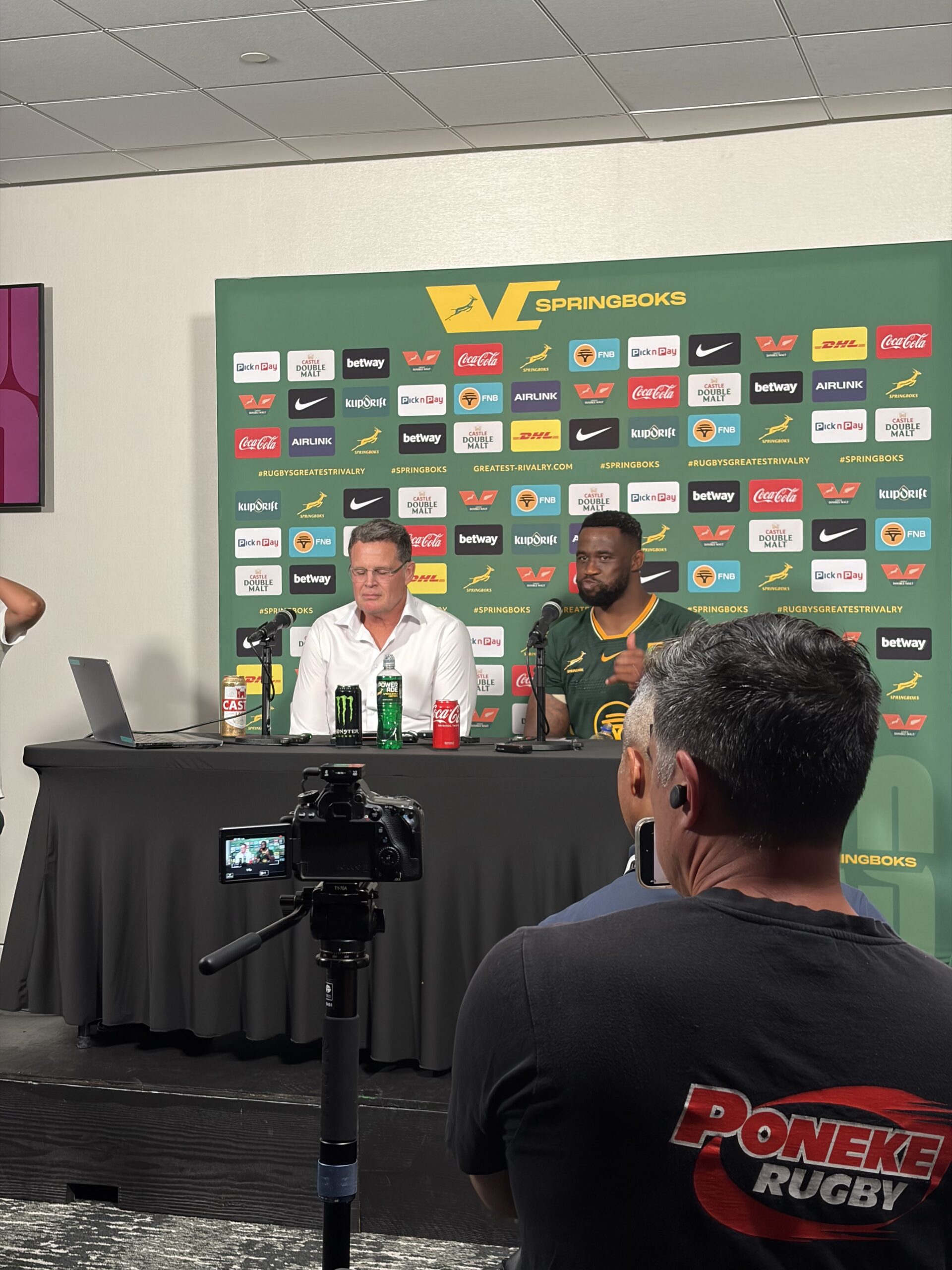
“I like the country, I didn’t know there was so many South Africans (here)!.
Commenting on the redemption for the bitter loss in his first game, he continued, “Obviously that first time (versus Wales) was awful, – a couple of years later, we win against a great team here like New Zealand, it makes up in a big way for that start I had.”
Both dedicated the victory to the fans and country of South Africa, those abroad and back home, and those who could afford to come and those who couldn’t. The ticket pricing of the tour, not only in Baltimore but also in South Africa, especially for the tests against the United Rugby Championship Sides, has been a particularly sour note in South African media. It will be interesting to see what ticket pricing will look like when they come to New Zealand in 2030.
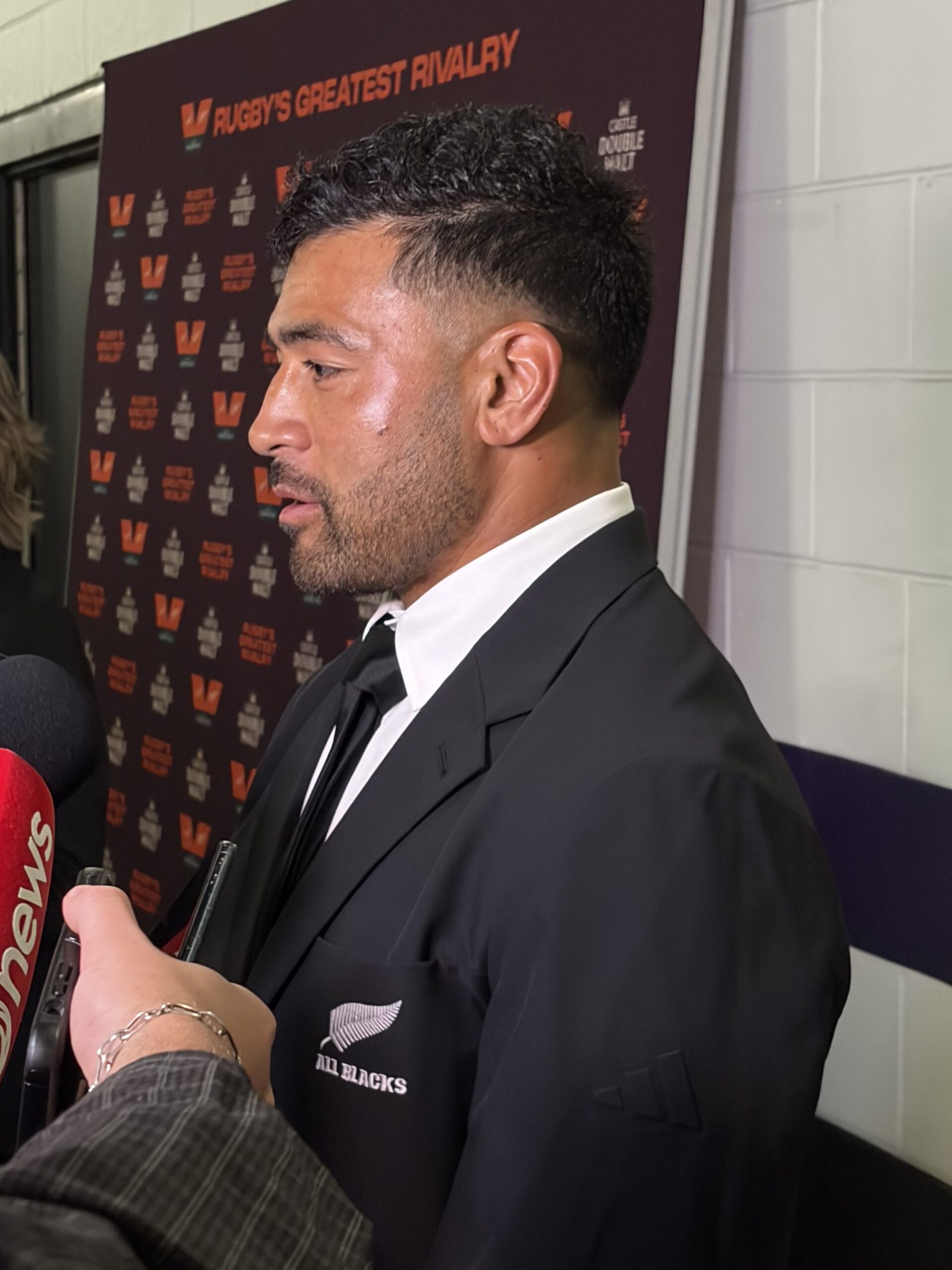
Upon the arrival of Dave Rennie and the battered and bruised Codie Taylor, the New Zealand journalists droned on in their typical fashion, with the most insightful questions typically revolving around officiating, injuries, penalties, and what can be done differently.
One of the few moments of relief from the slog was surprising the American media, who asked particularly good questions about the games impact on the U.S market, the attendance record, how both teams were enjoying North America, and naturally hinting at the possibility that several of the players and coaches could be meeting again in the 2031 world cup in America. Having this third party of no-fuss professionals was excactly what the tour needed to avoid the repeating the exact same questions that took place after the tests in South Africa.
On the topic of playing in the United States, Codie said, “It’s been amazing to come to come over here and soak up what America has to offer – they obviosly love their sports and have got right behind rugby.”
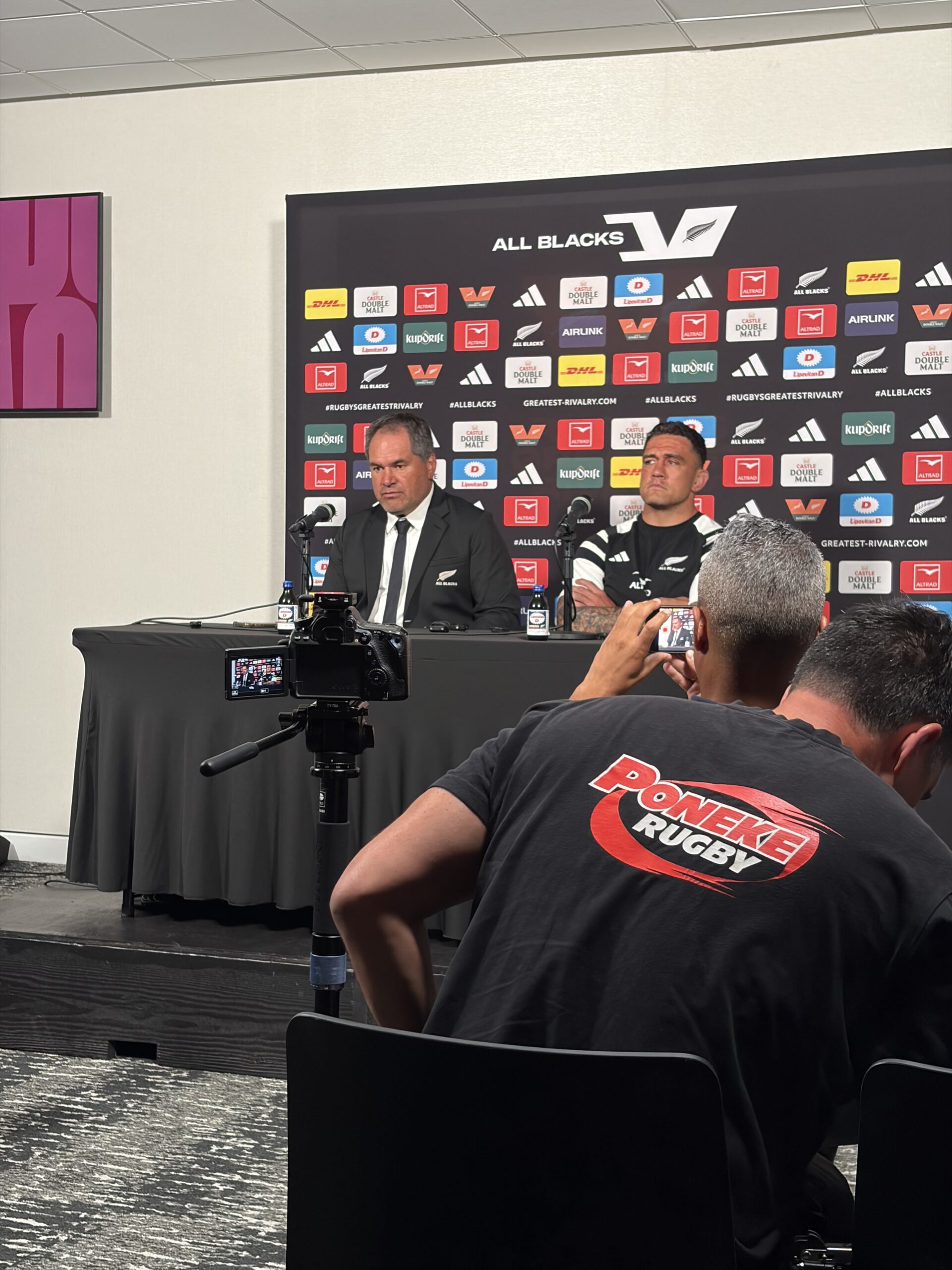
Rassie Erasmus wasn’t the only person susprised by the large presence of South Africans in the country. Codie continued, “I would have liked to see more black jersey’s but obviously there’s more South African’s over here which I wasn’t aware of until I kept seeing them up and down the hotel elevator!”
Not only did Codie Taylor acknowledge the great experience they had in the United States, but also the hope that they will capitalise on the interest in the sport.
“(We hope American’s see) how exciting rugby can be, America’s got some great sports over here and they’re fanatical about everything they’re involved in. It would be great to see U.S.A Rugby keep building, – Leading into 2031, it’s in a great place to build a foundation on what will be an awesome world cup”
Speaking of the World Cup, if Baltimore were hoping to build a case to host, M&T Stadium and the events building up to this game have made an incredibly strong argument. Despite Egar Allan Poe and Hairspray being the city’s international reputation, there’s so much more to this great place. It certainly does not have Chicago or New York’s infrastrucutre, but it brought the fans and the atmosphere. There will probably have to be significant investment from World Rugby or U.S.A Rugby to make it happen, but it’s better than a half-filled stadium in Washington D.C. Read more about Six60 and the programming in Baltimore here.
Lastly, a Canadian perspective on the game. Canada’s mens rugby team have been a tough watch for over a decade now, with the one fixture they seem to be able to consistently triumph in being against their adversaries south of the border. While the maple leaf might achieve victory over the eagle presently, Codie’s words bring warning, there will be pressure for the USA to perform next World Cup, and as automatic entrants Canada will have to put the work in during qualification to even make it to that World Cup. Kenya, Namibia and Zimbabwe are steadily building, and South American rugby is growing faster than a toddler Ox Nché after his parents introduced him to cake. Less than 4,000 spectators in Edmonton will not grow the game in Canada, and not set them up for success against their continental adversaries. With most club mens teams made up of foreign expats, perhaps it’s not even worth it?
Canada’s women’s team are inches away from World Cup glory, and have three tests against the rampaging Red Roses this year, with two at home. If the leaf can tango just as well as the rose, perhaps Canada should put all their chips into achieving glory in their women’s game? I know several ticket holders in Baltimore that will be visiting Toronto and Ottawa for the girls. I don’t know a single one that watched the boys in Edmonton or Winnipeg.
Or perhaps they can ask the French mens team really nicely if they want to have a test in Québec!
Match Information
South Africa vs New Zealand
M&T Bank Stadium, Baltimore, Maryland
43 – 28
| South Africa | New Zealand |
| Coach – Rassie Erasmus | Coach – Dave Rennie |
| 1. Ox Nché | 1. Ethan de Groot |
| 2. Malcolm Marx (Try 48′) | 2. Codie Taylor (C) (Try 7′) |
| 3. Wilco Louw | 3. Fletcher Newell |
| 4. Eben Etzebeth | 4. Patrick Tuipulotu |
| 5. Ruan Nortjé | 5. Sam Darry |
| 6. Siya Kolisi (C) | 6. Tupou Vaa’i |
| 7. Pieter-Steph du Toit | 7. Ethan Blackadder (Try 62′) |
| 8. Jasper Wiese | 8. Peter Lakai |
| 9. Morné van den Berg (Try 21′) (Con 52′) | 9. Cam Roigard |
| 10. Sacha Feinberg-Mngomezulu (Con 15′, 22′) (Pen 3′) | 10. Richie Mo’unga |
| 11. Ethan Hooker | 11. Josh Moorby |
| 12. Damian de Allende (Try 14′) | 12. Jordie Barrett |
| 13. Jesse Kriel | 13. Anton Lienert-Brown |
| 14. Kurt-Lee Arendse (Try 71′) | 14. Will Jordan (Try 36′) |
| 15. Damian Willemse | 15. Damian McKenize (Con 8′, 37′, 63′, 79′) |
| 16. Deon Fourie | 16. Asafo Aumua |
| 17. Gerhard Steenekamp | 17. Xavier Numia |
| 18. Thomas du Toit | 18. Tyrel Lomax |
| 19. Lood de Jager | 19. Josh Lord |
| 20. André Esterhuizen | 20. Wallace Sititi |
| 21. Cameron Hanekom (Try 75′) | 21. Kyle Preston |
| 22. Cobus Reinach | 22. Rieko Ioane |
| 23. Manie Libbok (Con 72′ , 76′) | 23. Beauden Barrett (Try 79′) |
Tour Results
7th August, 2026
DHL Stormers vs All Blacks
Cape Town Stadium, Cape Town
21 – 38
11th August, 2026
Hollywoodbets Sharks vs All Blacks
Kings Park Stadium, Durban
0 – 54
15th August, 2026
Vodacom Bulls vs All Blacks
Loftus Versfeld Stadium, Pretoria
19 – 50
22nd August, 2026
Springboks vs All Blacks (Test #1)
Ellis Park Stadium, Johannesburg
16 – 33
25th August, 2026
10bet Lions vs All Blacks
Ellis Park Stadium, Johannesburg
35 – 41
29th August, 2026
Springboks vs All Blacks (Test #2)
Cape Town Stadium, Cape Town
33 – 26
5th September, 2026
Springboks vs All Blacks (Test #3)
FNB Stadium, Johannesburg (Soccer City)
29 – 24
12th September, 2026
Springboks vs All Blacks (Test #4)
M&T Bank Stadium, Baltimore, Maryland
43 – 28
Article by Joseph Simpson, 15th September 2026
Want to know more? Reach out to Joseph via our Facebook and Instagram channels.